


Hospice care is a type of medical care that is designed to provide comfort and support to individuals who are facing a life-limiting illness. The focus of hospice care is on improving the quality of life for both the patient and their loved ones, rather than on curing the illness. Hospice care is typically provided by a team of healthcare professionals, including doctors, nurses, social workers, and spiritual advisors, who work together to provide compassionate care and support to patients and their families.


When the burden of treatment outweighs the benefits and/or the patient has experienced notable decline and multiple hospitalizations over the last several months, he or she might be ready for hospice. Other indications include:
For a deeper, more thoughtful exploration see 8 Signs It’s Time to Call Hospice.
A patient is eligible to receive hospice services when their illness is terminal. A physician determines the patient’s life expectancy is six months or less if the disease runs its ordinary course. In addition, the patient must meet Medicare’s disease-specific criteria.
Hospice is for people who have a limited life expectancy and patients whose condition is such that a doctor would not be surprised if the patient died within the next six months. This doesn’t mean the patient will die in the next six months; it simply means that he or she has a condition that makes passing a realistic possibility.
When treatment options for a disease have been exhausted or are no longer working, hospice provides a way for people to live in comfort, peace, and dignity without curative care. Hospice isn’t about giving up, but about improving the quality of a patient’s life by being free of pain, surrounded by family, and in the comfort of their home.
Finding care in assisted living facilities, nursing homes, or hospitals may be more complicated during COVID-19. However, these facilities may continue to update their services and policies to comply with state departments of health and CDC guidelines to protect the health and safety of people receiving care and the staff providing care. Learn more from CDC.
If you have questions or concerns about these uncertain times, one of Sage’s social workers or care managers will be glad to assist you by calling (480) 618-7696.
Anyone can request a hospice evaluation at no cost. A physician may make the referral or provide several options and let the patient/family decide. The physician must certify to the hospice provider that the patient is eligible and has a prognosis of six months or less.
When a referral is made, the hospice provider makes an appointment (the same day or on a convenient date) to meet with the patient and family. The admissions nurse evaluates the patient, answers the family member’s questions, and creates a plan of care that reflects the patient/family’s wishes. If the discussion goes well and the family is ready, they sign admission paperwork, and the hospice team begins to visit.
The hospice nurse creates a plan of care with the patient’s and family’s input designed to meet the patient’s needs and determines the frequency of visits by the hospice staff. A hospice nurse can make additional visits if needed, 24 hours a day, seven days a week.
A person may withdraw from the hospice program for various reasons, such as resuming aggressive, curative treatment or pursuing experimental measures. Also, patients often improve with hospice services because the focus of their care shifts to comfort, pain relief, symptom management, and quality of life. They still have a terminal illness, but their symptoms are so improved that they no longer qualify for hospice services. A hospice must discharge a patient whose underlying disease or condition is no longer considered terminal. Patients can revoke hospice care for any reason and return at any time, as long as their doctor recertifies their eligibility.
While a patient is not required to sign a DNR order before being admitted to hospice, some hospice providers may ask you to sign the order. However, as long as the patient and his family understand that hospice offers palliative care rather than curative care, any Medicare-certified hospice will not ask the patient to sign the DNR order.
The term advance directive describes two types of legal documents that enable individuals to plan for and communicate their end-of-life wishes if they can no longer express informed consent. These two documents are a living will and a medical power of attorney.
Living Will: Allows an individual to document their wishes concerning medical treatments at the end of life.
Medical Power of Attorney: This allows an individual to appoint a person they trust as their healthcare agent (or surrogate decision-maker), who is authorized to make medical decisions on their behalf.
To learn more, visit our article Advance Directives: What are DNR and DNI orders?
While hospice strives to manage pain and other symptoms outside of the hospital setting, the patient always has the choice to go to a hospital. The Medicare hospice benefit covers short-term general inpatient care in the hospital when a patient’s symptoms can no longer be managed in another care setting. A written agreement between the hospital and hospice provider is required, and the patient and/or family should always contact the hospice nurse before going to the hospital.
A hospice patient may continue to see their PCP. In addition, hospice physicians and team members work with the patient’s PCP to ensure their clinical and emotional needs are being met and that their care is being carried out appropriately. Their PCP chooses his or her level of participation in their care. A patient must get permission from their hospice provider to see any other physicians/specialists outside their PCP for their terminal condition.
Unlike home health, there is no homebound rule for hospice patients. However, they are encouraged to travel outside of the home, if they are able, to promote quality of life.
Home health care patients require skilled care and must show improvement from this care. When these goals are no longer realistic, the patient can be transferred to hospice care. In addition, home health and hospice can provide services if the home health diagnosis is unrelated to the hospice diagnosis.
Nursing homes focus on routine daily care and rehabilitation. Nursing home patients who receive hospice services get additional, customized support determined by their plan of care, which focuses on the physical, emotional, and spiritual end-of-life needs of patients and their families.
No. Generally patients recieve palliative care before hospice.
Though the terms often get confused, palliative care isn’t the same as end-of-life care or hospice care. You can receive palliative care at any stage of your illness, and being on palliative care doesn’t mean your doctors stop trying to cure your condition.
Hospice care is for people who have an incurable illness and are approaching the end of life, and treatments meant to stop your disease are halted. The goal of hospice and end-of-life care is to ensure comfort during your final days and to provide emotional support for you and your loved ones. You can receive hospice care at home or at a hospice facility.
Learn more: When should someone be offered palliative care? and 8 Signs It’s Time to Call Hospice
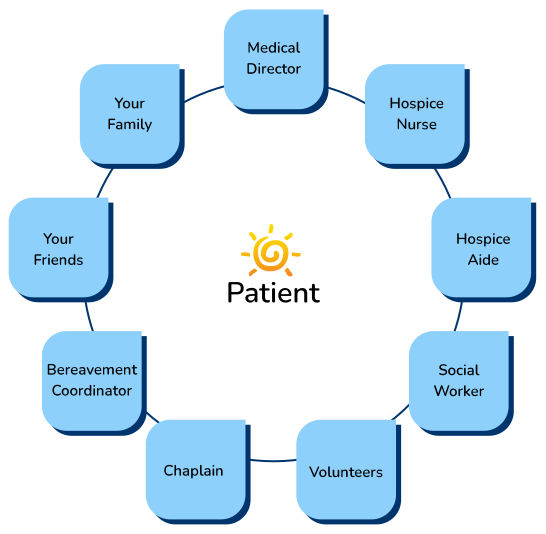
Elevation Hospice Care in Utah is dedicated to providing compassionate end-of-life care to patients and their families. Their team of healthcare professionals, including a physician, nurse, hospice aide, social worker, chaplain, volunteer, and bereavement coordinator, work together to ensure that patients are comfortable and treated with dignity during their final months, weeks, or days. Their interdisciplinary approach allows for comprehensive care that addresses the physical, emotional, and spiritual needs of patients and their loved ones.
*are required fields.
IMPORTANT: By completing this form, you agree to receive information from Elevation Hospice, Primary and Palliative Care – Utah. Your privacy is important to us. Please read our privacy policy for more information.
*are required fields.
DISCLAIMER: This site is protected by reCAPTCHA v3 and the Google Privacy Policy and Terms of Service apply.





11693 South 700 East, #200
Draper, UT 84020
Contact Numbers:
(O) 801-610-1868 (24/7)
(F) 801-810-2147
11693 South 700 East, #200
Draper, UT 84020
Contact Numbers:
(O) 801-810-2147 (24/7)
(F) 480-498-3725
